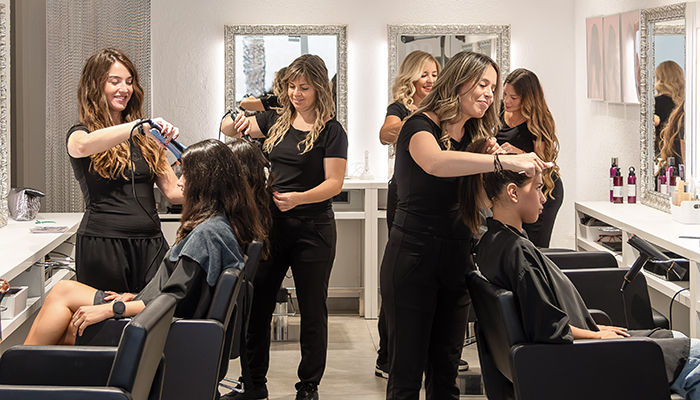
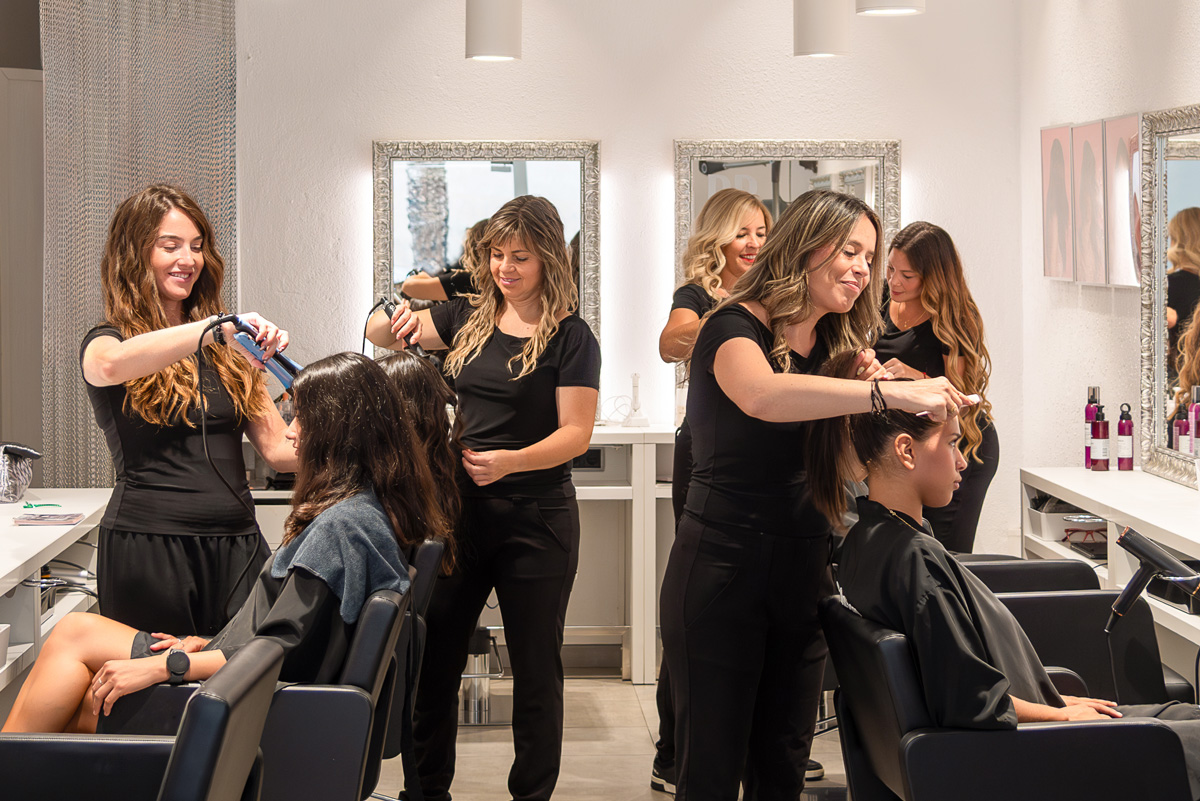
Running a team-based commission salon can be incredibly rewarding, but it often comes with a common trap: the owner feeling like they have to carry everything. If you’re doing all the heavy lifting in your salon, you aren’t building a business—you’re just creating a job for yourself.
The secret to true success and scaling your business lies in effective goal setting, data-driven coaching, and shifting from owner-dependency to cohesive teamwork. By utilizing Aura Salonware salon management software, you can align your team’s performance with your salon’s long-term vision, enhancing motivation, improving service quality, and increasing client satisfaction.
1. Stop Carrying Everything: The Power of Defined Roles
The transition to a team-based structure starts with delegation. You cannot be the only person watching the numbers. Identify business goals and then define “who owns what.” When team members understand their specific role—whether it’s boosting retail-to-service ratios or ensuring client retention—they stop being passive staff members and become active contributors.
2. Establish Your Baseline with Data
Before you set a single goal, you need to know where your business stands. Start with your KPI Dashboard for a quick snapshot of revenue per service and retention trends. Use Aura’s comprehensive reporting suite to get the full picture:
- Comparison Report: Ideal for establishing your baseline and goal setting, team reviews, and planning ahead.
- Future Booked Report: Tracks the total number of future appointments scheduled at your salon. Key tool for forecasting future revenue, tracking salon growth, and measuring how well your team is pre-booking clients.
- Employee Sales Summary: Perfect for tracking service-to-retail ratios and service averages per ticket.
3. Build Your Strategy: Hourly Pricing & Team Pay
Ensure your hourly pricing aligns with your staff’s expertise and your salon’s brand positioning. When paired with a team-based pay model, you create an environment where the team wins together. Use Aura’s reporting tools to ensure these models are driving the profitability you need to sustain the business and reward high performers.
4. Leverage Aura’s Goal Setting & Tracking
Once your baseline is set, move beyond static goals. Use the Goal Setting & Tracking feature to bring your strategy to life:
- Real-Time Progress: View visual progress bars that update automatically. This transparency builds accountability.
- Multi-Location Visibility: Easily compare performance and identify top-performing teams or areas needing extra training.
- Alignment: Share goals directly with your stylists. Seeing individual goals alongside salon-level expectations creates a sense of ownership without micromanagement.
5. Align Goals with Individual Strengths
Recognize that each team member possesses unique talents. Tailor individual goals to leverage these specific skills—such as prioritizing color work for a color specialist or client service tasks for those with high customer satisfaction ratings—to lead to better outcomes.
6. The Meeting Strategy: Feedback, Support, and Review
Goals die without follow-up. Schedule consistent meetings to review your data. During these meetings, don’t just talk about the “what”—talk about the “how.” Use these sessions to discuss obstacles identified in your reports and brainstorm new strategies.
- Tie to the “Why”: Successful owners often tie metrics to an individual’s personal “why”—such as purchasing a car or planning a trip—to motivate beyond simple monetary rewards.
- Foster Accountability: Use this collaborative time to celebrate small wins, offer constructive feedback, and hold the team collectively accountable.
7. Implement Incentives and Set a Vision
Recognize hard work by establishing incentive programs for meeting specific objectives. Bonuses, gift cards, education opportunities, or extra time off can significantly boost morale. Above all, ensure that short-term goals align with your salon’s long-term mission and values, so every team contribution directly impacts the business’s future.
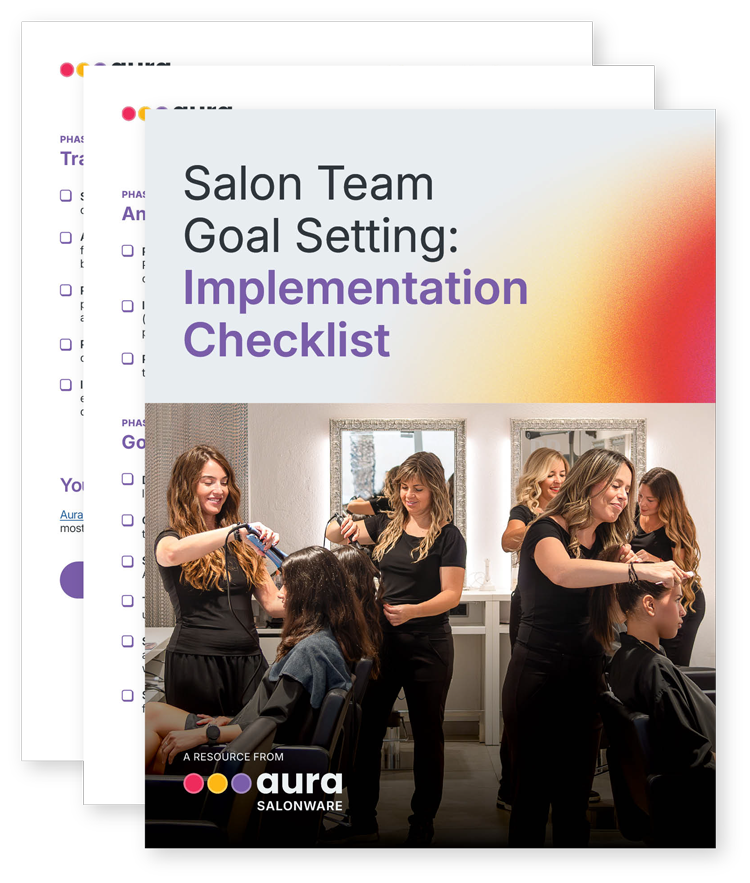
Get the ultimate salon team optimization tool
Stop trying to “do it all.” Our guide shows you how to play to your team’s strengths, giving you your time back while boosting both team morale and client satisfaction.